Stainless steel is valued for its clean appearance, but it is not completely stain-proof. A dull brown mark near a weld, a blue heat tint on a pan, or orange specks around a sink can appear surprisingly quickly. Understanding what causes discoloration on stainless steel helps you choose a safe and effective solution.
Several factors may be responsible. Excessive heat can create yellow, purple, or blue oxide layers on the surface. Chlorides from salt, bleach, and hard-water residue may damage the protective chromium oxide film. Iron particles from steel wool or nearby metal tools can also leave rust-like stains. Moisture trapped beneath grime often makes the problem worse, especially around seams, screws, and drainage areas.
The right cleaning method depends on the stain’s source. Begin with warm water, mild detergent, and a soft microfiber cloth. Follow the grain of the finish. Avoid abrasive pads and chlorine-based cleaners unless the manufacturer specifically permits them. Test any stronger product on a hidden area first. Small details matter.
I once assumed every orange mark was rust from the stainless steel itself. That assumption was incomplete. Contamination from ordinary carbon-steel tools caused the stain instead. This is why careful inspection matters before scrubbing. For persistent discoloration, consult the appliance or material manufacturer, particularly when welding, food preparation, or commercial equipment is involved. Professional guidance can prevent a cosmetic issue from becoming permanent surface damage.
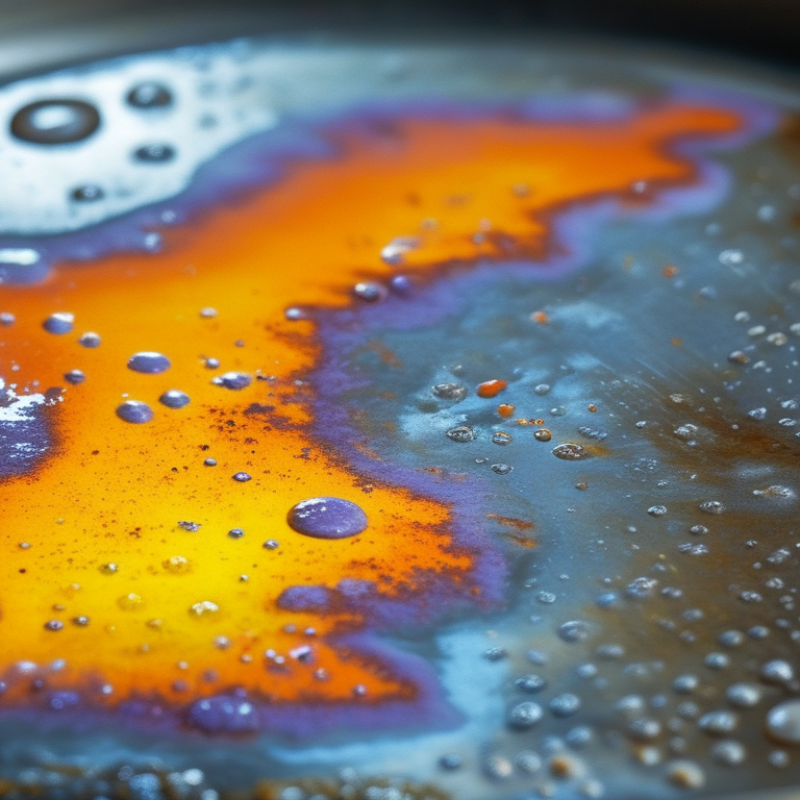
Discoloration on stainless steel rarely appears as one simple stain. A pale yellow or straw-colored band may form near a weld, burner, or overheated pan. Blue, purple, and bronze shades can follow the same heat mark. These rainbow tones are thin surface changes, not ordinary dirt. Their colors often shift when viewed from different angles.
Brown spots look more familiar. They may resemble tea stains, especially around sinks, fasteners, or wet edges. Small orange specks can suggest surface rust from iron particles. Deeper pits are more serious. They feel rough under a fingertip and may collect dark moisture. White, cloudy patches usually point to mineral deposits or dried cleaning residue. Greenish marks can appear where moisture and foreign metal particles remain together.
During inspections, I look at the stain’s shape before choosing a cleaning method. A clear drip outline suggests evaporation, while a sharp dark line may follow a seam. Black smudges can come from carbon, rubber, or trapped grime, but they should not be guessed at carelessly. I once mistook a heat tint for dirt and scrubbed too aggressively. The surface looked cleaner, yet the fine scratches became more visible. A soft cloth, good lighting, and a close view usually reveal more than forceful rubbing. If discoloration keeps returning, spreads beneath the surface, or accompanies pitting, professional assessment is safer than repeated polishing.
Stainless steel does not remain perfectly bright under every condition. Heat can create straw-yellow, purple, blue, or dark brown bands across the surface. These colors appear when elevated temperatures thicken the invisible chromium oxide layer. Light then reflects differently from the steel, producing visible interference colors.
I have seen this after welding, grinding, and repeated exposure to hot steam. A discolored area is not always deeply damaged. Sometimes, it is only a thin oxide film. However, prolonged heating can reduce corrosion resistance, especially near welds or poorly cleaned edges. Heat marks may also trap oil, dust, and mineral deposits.
Oxidation needs attention.
Moisture, salt, and airborne chemicals can speed the change. Chloride deposits are particularly troublesome because they can start small pits beneath surface contamination. Gentle cleaning with a suitable stainless-steel cleaner usually works better than aggressive scrubbing. Abrasive pads may leave directional scratches and create another problem.
It is easy to blame heat alone. That assumption can be wrong. Uneven airflow, contaminated tools, or carbon-steel particles may also stain the surface. During inspection, I check the color, texture, location, and nearby heat sources before choosing a treatment. A practical assessment matters because polished, brushed, and welded surfaces respond differently.
Stainless steel discolors when chlorides damage its passive surface layer. This invisible layer contains chromium oxide. It normally protects the metal from corrosion. Chloride ions can break through weak spots, especially where moisture remains trapped. Saltwater, coastal air, sweat, and de-icing residue are common sources.
Salt leaves more than a white crust. It can hold moisture against the surface and create tiny corrosion sites. Brown, yellow, or rusty spots may appear around seams, screws, and welds. Warm conditions make the problem worse. Pool chemicals, bleach, acidic cleaners, and some industrial solutions can also stain stainless steel. Concentrated chemicals are especially aggressive.
A common inspection mistake is treating every dark mark as rust. I used to make that assumption. It is not always correct. Heat tint, embedded iron particles, and cleaning residue can look similar. A practical check starts with fresh water and a mild, chloride-free detergent. Use a soft cloth, follow the grain, rinse thoroughly, and dry the surface. Avoid steel wool and abrasive pads. They can leave particles that later rust.
Small stains deserve attention. They may signal repeated salt exposure rather than a single accident. Test any cleaner on a hidden area first. Never mix cleaning chemicals. If discoloration returns quickly, inspect nearby joints, drainage points, and areas where saltwater collects. Different stainless steel grades also resist chlorides differently, so the material specification matters.
5 Tips What Causes Discoloration on Stainless Steel?
How Scratches, Residue, and Contamination Create Discoloration
Stainless steel can turn yellow, brown, blue, or dull gray without losing its identity. Scratches are often the starting point. They disturb the passive chromium-oxide film and trap moisture, salt, and cleaning residue. Tip 1: Inspect brushed surfaces under strong side lighting. Fine scratches often hide near welds, handles, and corners. Tip 2: Wipe spills quickly. Chloride residue from salt, bleach, and some cleaners can encourage surface staining. The Nickel Institute identifies chlorides, deposits, and poor drainage as common contributors to stainless steel corrosion.
Residue can look like rust, but the source may be contamination. Carbon-steel dust from grinding can leave orange specks. Iron particles may appear after nearby fabrication work. Tip 3: Use dedicated stainless-steel tools and clean cloths. Never reuse abrasive pads from carbon-steel work. Tip 4: Rinse after chemical cleaning, then dry completely. A wet film can concentrate contaminants as it evaporates. This detail is easy to miss. I have seen clean-looking panels discolor around unseen ledges.
The British Stainless Steel Association recommends removing deposits and controlling surface contamination during service. Its technical guidance also warns that rougher finishes retain more dirt. Tip 5: Match cleaning pressure to the finish. Scrubbing too hard may create a brighter patch and new scratches. The AMPP IMPACT study estimated global corrosion costs at nearly 3.1% of worldwide GDP, showing why small maintenance errors deserve attention. Yet not every color change signals failure; heat tint, cleaner residue, and reflected light can confuse diagnosis. Test a small area first.
Stainless steel discoloration usually comes from heat, salt, hard-water minerals, or iron contamination. Blue, gold, or brown patches often indicate heat tint, while orange marks may signal surface rust from trapped particles. Fingerprints and cooking oils can also darken brushed finishes.
Prevention starts with gentle, regular care. Wipe spills promptly, especially salty water, tomato sauce, and chlorine-based liquids. Use warm water, a soft microfiber cloth, and a cleaner made for stainless steel. Follow the grain, not across it. Dry the surface completely. Small habit, large benefit. Avoid steel wool, abrasive powders, and harsh scrapers. They can leave scratches that collect dirt. Never mix cleaning chemicals, even when a stain seems stubborn.
For existing discoloration, test any method on a hidden area first. Apply diluted dish soap for oily film, then rinse and dry. For mineral spots, a small amount of diluted white vinegar may help, but do not leave it sitting. Rinse thoroughly afterward. A non-abrasive stainless-steel cleaner can address heavier staining when used as directed. Heat marks may need repeated gentle treatment rather than force. Aggressive rubbing often makes the surface look worse. If pitting, deep rust, or peeling appears, stop scrubbing and consult a qualified surface-care professional. The finish may already be damaged.
Heat exposure can create visible oxide colors on stainless steel. The chart shows approximate surface temperatures at which common heat-tint colors may appear; the exact color depends on the alloy, heating time, oxygen level, and surface condition.
Important: Heat tint is an oxide layer, while discoloration caused by iron contamination, chlorides, or harsh chemicals may require a different cleaning method. Always test a small, hidden area first and rinse the surface thoroughly.
: Heat tint often appears as yellow, blue, purple, or bronze bands. These colors may shift with the viewing angle. It is not ordinary dirt.
Orange specks or brown spots may indicate iron particles on the surface. They often appear near screws, seams, sinks, or wet edges. Small marks still matter.
They usually come from hard-water minerals or dried cleaning residue. A drip-shaped outline often shows where water evaporated. The pattern gives clues.
Chlorides can damage stainless steel’s invisible protective layer. Saltwater, sweat, coastal air, and de-icing residue may leave moisture behind. That trapped moisture encourages corrosion.
Use warm water, mild detergent, and a soft microfiber cloth. Wipe along the grain, rinse thoroughly, and dry completely. Gentle pressure works better.
A small amount of diluted white vinegar may loosen mineral deposits. Do not leave it on the surface. Rinse well afterward.
Avoid steel wool, abrasive powders, harsh scrapers, and forceful rubbing. They can create fine scratches and leave iron particles behind. I once mistook heat tint for dirt. That was not my best judgment.
Seek assessment when stains return quickly, spread, or accompany pitting. Deep rust, rough cavities, and peeling suggest more serious damage. Stop polishing then.
Discoloration on stainless steel can appear as blue, yellow, brown, gray, or cloudy patches that change the surface’s original bright finish. Understanding what causes discoloration on stainless steel starts with recognizing the effects of heat and oxidation, which can create heat tints or darkened areas when the metal is exposed to high temperatures. Chlorides, salt, and harsh chemicals may also attack the protective surface layer, leading to stains, corrosion marks, or uneven coloring.
Scratches, trapped residue, grease, dust, and contact with other metals can cause additional discoloration by holding contaminants against the steel. Preventing these problems requires regular cleaning with mild, suitable materials, prompt removal of salt and chemical residues, and avoiding abrasive tools. For existing stains, gently clean in the direction of the grain and use a non-abrasive method suited to the type of discoloration. Careful maintenance helps preserve the stainless steel’s appearance and protective qualities.

TEDDI STEEL