China Top 10 Seamless vs Welded Pipes What Is the Difference?

Time:2026-10-21 Author:Amelia
0%

China’s pipe industry serves power plants, refineries, construction sites, and long-distance energy projects. Before comparing the country’s top ten manufacturers, buyers must ask: what is the difference between seamless and welded pipes?

The distinction begins with production. Seamless pipe is pierced from a heated billet, leaving no longitudinal weld. Welded pipe is formed from steel plate or coil, then joined along a seam. That visible line is not automatically a weakness. Quality depends on steel grade, welding method, heat treatment, inspection, and service conditions.

The World Steel Association reported 1,019.1 million tonnes of crude steel production in China during 2023. This scale supports a broad pipe supply chain, but volume alone proves little about reliability. ASTM A53 covers both welded and seamless pipe, while ASTM A106 focuses on seamless carbon steel pipe for high-temperature service. ASME B31.3 also requires engineers to consider pressure, temperature, materials, fabrication, and testing together.

John C. Lippold, a recognized welding-metallurgy specialist, states, “Weldability is not an inherent material property; it depends on the process and application.” That principle matters here. A certified welded pipe may outperform a poorly specified seamless pipe in the wrong installation.

A ranking can oversimplify. Real procurement involves mill audits, traceability records, dimensional checks, hydrostatic testing, and non-destructive examination. The cheapest quotation may look attractive beside a bright warehouse stack. Yet corrosion, vibration, or repeated thermal cycling can expose hidden weaknesses later.

This guide compares China’s leading seamless and welded pipe suppliers through manufacturing capability, standards, testing evidence, delivery experience, and application fit. The answer is not simply “seamless is stronger.” It is more conditional, and sometimes less convenient.
China Top 10 Seamless vs Welded Pipes What Is the Difference?

Pipe Manufacturing in China: Seamless and Welded Production Methods

Pipe manufacturing in China commonly follows two routes: seamless production and welded production. Each route begins with controlled steel chemistry, but the forming process differs sharply.

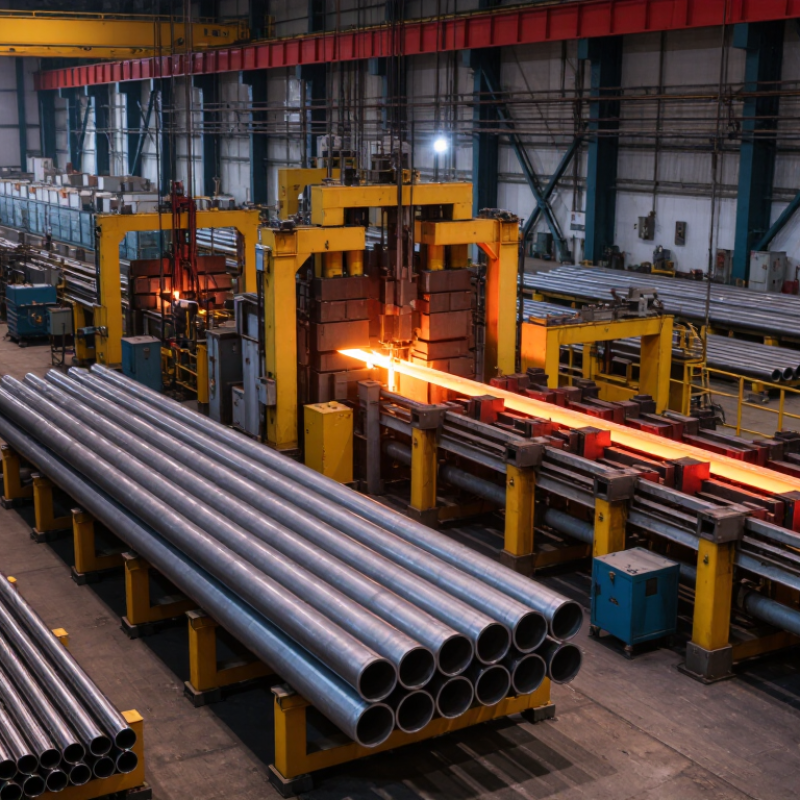
In seamless production, a round steel billet is heated until it becomes workable. A piercing mill pushes a mandrel through the billet, creating a hollow shell. Rolling mills then reduce its diameter and control wall thickness. Heat treatment may improve strength, toughness, or dimensional stability. Operators inspect surface defects, straightness, hardness, and ultrasonic signals. Small temperature changes can affect the final result.

Welded pipe starts with steel plate or coil. The material is leveled, trimmed, and formed into a circular shape. High-frequency or submerged arc welding joins the edges along a longitudinal or spiral seam. The weld area is then inspected, sized, and sometimes heat treated. Larger diameters often favor this route because production is efficient and material use is practical. In real factory work, alignment is never a minor detail. Uneven forming can create stress near the seam. That needs correction.

For both methods, reliable production requires heat-number traceability, calibrated gauges, and documented testing. Inspectors may check hydrostatic pressure, tensile strength, impact performance, and weld integrity. Seamless pipe is often selected for demanding pressure service, while welded pipe can offer consistent dimensions and competitive costs. Neither method is automatically superior. Application, steel grade, wall thickness, and inspection requirements should guide the decision. Past assumptions can be wrong. Specification review matters.

China Pipe Manufacturing: Seamless vs Welded Production Methods

Seamless pipes are formed from a solid steel billet through heating, piercing, elongation and sizing. Welded pipes are produced from steel strip or plate by forming it into a tube and joining the seam by welding. Heat treatment and non-destructive testing may vary according to the pipe grade and applicable standard.

Key Differences Between Seamless and Welded Pipe Structures

China Top 10 Seamless vs Welded Pipes: What Is the Difference?

Seamless and welded pipes differ mainly in their structures. Seamless pipe starts as a solid billet, then passes through piercing and rolling. It has no longitudinal weld seam. This design supports demanding pressure and temperature service.

Welded pipe forms from steel strip or plate. Edges are joined by electric resistance welding or submerged arc welding. The seam becomes the critical inspection area.

The difference is not simply “seamless is stronger.” Wall thickness, steel grade, heat treatment, and manufacturing control matter more than many buyers expect. API 5L and ISO 3183 require testing for chemical composition, tensile strength, toughness, and weld integrity.

The World Steel Association reported 1.89 billion tonnes of crude steel production in 2023. That scale supports broad pipe supply, but it does not guarantee consistent quality.

In practice, a well-tested welded pipe can outperform a poorly controlled seamless pipe. This point is often overlooked.

Tips:

Match the structure to service conditions. Check pressure, temperature, corrosion exposure, diameter, and inspection records. For high-pressure lines, review hydrostatic results and seam-testing methods. For large-diameter water or structural applications, welded pipe may offer better cost control. Ask for mill certificates and independent inspection when risk is high. Mistakes happen. Overspecification can waste money, while weak documentation can create serious failures.

China’s Top 10 Seamless and Welded Pipe Manufacturers

China Top 10 Seamless vs Welded Pipes: What Is the Difference?

China’s top 10 seamless and welded pipe manufacturers serve different engineering needs. Seamless pipes are formed from solid billets, then pierced and rolled. They offer strong pressure resistance and consistent performance in demanding applications. Welded pipes begin with steel plate or coil. The edges are shaped and joined through processes such as ERW or submerged arc welding.

The World Steel Association reported that China produced about 1.02 billion tonnes of crude steel in 2023. This large production base supports extensive pipe capacity, but capacity alone does not prove quality. A practical top-10 assessment should examine mill ownership, monthly output, export experience, ISO 9001 systems, and testing records. EN, ASTM, API, and GB compliance also matter. Public industry reports often rank manufacturers differently, because some measure revenue while others measure capacity. That weakness deserves attention.

Tips: Ask for heat numbers, hydrostatic test results, dimensional reports, and third-party inspection options. Check wall thickness at several points, not only at the pipe end. For welded products, review weld inspection methods, including ultrasonic or radiographic testing. The International Energy Agency expects continuing investment in energy infrastructure, but forecasts can change. Buyers should not select a supplier from a ranking alone. A factory visit, sample review, and small trial order can reveal practical problems that brochures hide.

Performance, Applications, and Standards of Both Pipe Types

China Top 10 Seamless vs Welded Pipes: What Is the Difference?

Seamless pipes are formed from solid billets, so they have no longitudinal weld. This structure supports demanding pressure and temperature conditions. They are often selected for boilers, hydraulic systems, oil equipment, and process piping. Welded pipes are made from steel strip or plate, then joined along a seam. Modern welding controls and non-destructive testing can produce reliable results. They commonly serve water systems, structural projects, transmission lines, and large-diameter applications.

Performance depends on more than pipe type. Seam quality, wall thickness, steel grade, corrosion allowance, and installation conditions all matter. Seamless pipe usually offers consistent resistance around the circumference, but it may cost more and have tighter size limitations. Welded pipe can provide excellent dimensional control and competitive pricing. Its seam requires suitable inspection, especially under cyclic loading or corrosive service. Small details matter.

Standards define measurable requirements. ASTM and ASME specifications may control chemistry, dimensions, tensile strength, hydrostatic testing, and heat treatment. Pipeline projects may also reference API specifications. Buyers should match the standard to pressure, temperature, fluid, and joining method. A certificate alone does not prove suitability. I have seen selections based only on “seamless” wording, which is a weak approach. The cheaper welded option may be adequate, while an expensive seamless pipe may still fail through poor material selection, bad storage, or improper welding.

How to Choose Between Seamless and Welded Pipes in China

Choosing between seamless and welded pipes in China starts with service conditions, not price. Seamless pipe is formed from a solid billet, so it has no longitudinal weld. It suits high pressure, high temperature, and demanding mechanical loads. Welded pipe is made from steel plate or strip and joined along a controlled seam. It often offers lower cost, wider size options, and faster production for water, structural, and general industrial systems.

Think about pressure first. For a boiler line, hydraulic cylinder, or critical process pipe, seamless construction may provide greater confidence. For low-pressure water transfer, piling, or large-diameter structural work, welded pipe can be a practical choice. Pipe diameter, wall thickness, corrosion exposure, and operating temperature also matter. A cheap pipe can become expensive after installation.

Ask Chinese suppliers for material certificates, dimensional reports, weld inspection records, and hydrostatic test results. Confirm the required standard, such as ASTM, EN, or ISO, before requesting quotations. Independent inspection can verify wall thickness, surface condition, marking, and packing. Do not rely on photographs alone. They rarely show ovality or internal defects.

The decision is not always obvious. I have seen buyers select seamless pipe unnecessarily and lose budget without gaining useful performance. I have also seen welded pipe chosen for severe service without enough testing. Review the design with a qualified engineer, compare total project risk, and leave room for a second technical opinion.

FAQS

What is the main difference between seamless and welded pipes?

Seamless pipes come from solid billets and have no longitudinal weld. Welded pipes use steel plate or coil with a joined seam.

When should a buyer choose seamless pipe?

Seamless pipe suits high pressure, high temperature, and demanding mechanical loads. Pressure comes first.

Are seamless pipes always better than welded pipes?

No. Seamless pipes can increase costs without adding useful performance.

When is welded pipe a practical choice?

Welded pipe suits low-pressure water transfer, piling, structural work, and many general industrial systems.

Which documents should buyers request from a supplier?

Request material certificates, heat numbers, dimensional reports, and hydrostatic test results.

How should buyers inspect welded pipe quality?

Review ultrasonic or radiographic weld testing records. Check surface condition and seam consistency.

Why should buyers not rely on rankings alone?

Rankings may measure revenue, capacity, or other factors. Public lists can disagree.

What practical checks can reveal hidden pipe problems?

Measure wall thickness at several points, not only near the pipe end. Check ovality, markings, and internal condition.

How can buyers reduce selection risk in China?

Confirm the required standard before requesting quotations. Compare total project risk, not price alone.

Conclusion

China’s pipe industry offers both seamless and welded products, manufactured through distinct production methods. Seamless pipes are formed from solid steel billets and generally provide uniform strength, high pressure resistance, and reliable performance in demanding environments. Welded pipes are produced by shaping steel plates or coils and joining the edges, making them efficient, versatile, and often more economical for large-scale projects. Understanding what is the difference between seamless and welded pipes requires examining their structure, manufacturing process, dimensional accuracy, wall thickness, and application requirements.

This overview introduces China’s leading categories of seamless and welded pipe manufacturers without focusing on specific brands, while explaining how both pipe types perform under different conditions. It also discusses common standards, quality controls, and applications in energy, construction, transportation, machinery, and industrial systems. The right choice depends on pressure, temperature, corrosion exposure, diameter, project specifications, delivery needs, and budget. Careful evaluation of technical standards and supplier capabilities helps buyers select a suitable pipe solution for reliable and cost-effective performance.

Amelia

Amelia

Amelia is a seasoned marketing professional with a wealth of expertise in our company’s core offerings. With an unwavering passion for driving growth and innovation, she plays a pivotal role in shaping our marketing strategies and enhancing brand visibility. A key aspect of her responsibilities......