When exploring the world of pipes, a common question arises: what is the difference between seamless and welded pipes? Both types serve essential roles in various industries, from construction to oil and gas. Understanding their differences is crucial for selecting the right material for a project.
Seamless pipes are manufactured without joints. This results in a stronger, more durable product. The absence of welds reduces the risk of leaks. Welded pipes, on the other hand, are made by joining two pieces together. This process can introduce vulnerabilities, yet they are often more cost-effective for large-scale projects.
The choice between these pipes depends on various factors, such as application, budget, and environment. For example, seamless pipes may be preferred in high-pressure applications. However, welded pipes are widely used due to their availability and lower production costs. Ultimately, understanding these distinctions is essential for making informed decisions in pipe selection.
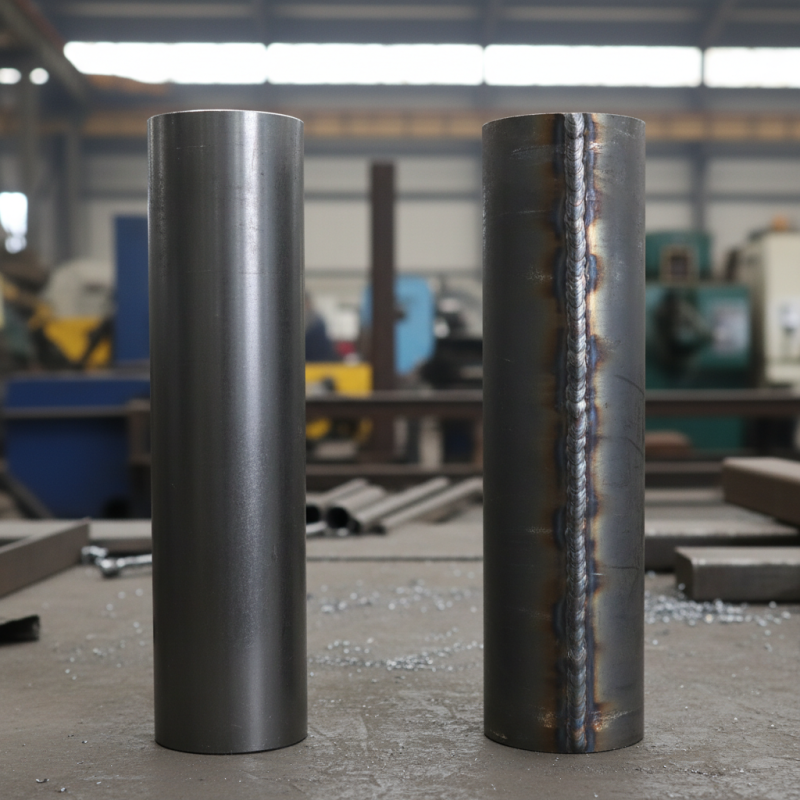
Definition of Seamless Pipes and Their Key Characteristics
Seamless pipes are known for their distinct manufacturing process. Unlike welded pipes, seamless pipes are produced from a single, solid piece of metal. They undergo extreme heating and shaping, which eliminates weak points that may exist in welded joints. This results in pipes that are stronger, more durable, and resistant to pressure and external forces.
One of the key characteristics of seamless pipes is their smooth internal and external surfaces. This feature enhances their flow efficiency and reduces resistance. Manufacturers often prefer seamless pipes for high-pressure applications, such as oil and gas transport. They also minimize the risk of leaks, making them a favored choice in critical industries. While seamless pipes boast exceptional qualities, they can be more expensive and harder to source than their welded counterparts.
The manufacturing process can be intricate and involves various stages, such as piercing and elongating. This complexity contributes to the overall quality and reliability of seamless pipes. However, the costs associated with this production technique often lead to debates about their necessity in less demanding applications. Reflecting on these aspects, it’s clear that while seamless pipes have superior qualities, consideration of specific project needs is crucial before choosing between seamless and welded options.
Definition of Welded Pipes and Their Primary Features
Welded pipes are essential in various industries due to their unique manufacturing process. They are created by welding together flat pieces of metal into a pipe shape. This process typically involves either electric resistance welding or laser welding, which results in strong joints. According to the American Institute of Steel Construction, welded pipes can achieve a high level of strength and durability, making them ideal for heavy-duty applications in construction and oil industries.
These pipes come with several primary features. They are often less expensive to produce compared to seamless pipes. Moreover, the availability of various sizes and thicknesses provides flexibility for many applications. However, welded pipes can show weaknesses at the weld seam, where they may be susceptible to corrosion and stress. The World Steel Association reports that welded pipes are widely used in gas distribution networks and water supply systems, highlighting their significance in infrastructure.
**Tip:** Always check the certification and standards for welded pipes in your projects. This ensures quality and performance meet industry requirements.
Another factor to consider is the manufacturing tolerances of welded pipes. While they provide efficiency in production, this can also mean variations from the specified dimensions. Ensuring that the pipe meets your operational requirements is crucial. Conducting regular inspections can help maintain pipeline integrity.
What Is the Difference Between Seamless and Welded Pipes?
| Feature |
Seamless Pipes |
Welded Pipes |
| Manufacturing Method |
Produced from a solid round steel billet. |
Made by welding together two or more pieces of metal. |
| Strength |
Higher tensile strength and durability. |
Generally lower strength due to weld seams. |
| Applications |
High-pressure applications, oil and gas pipelines. |
Construction, water supply, and general applications. |
| Cost |
Typically more expensive due to complex manufacturing. |
More cost-effective due to simpler production. |
| Corrosion Resistance |
Better resistance due to no weld seams. |
May be more prone to corrosion at weld points. |
| Inspection |
Easier to inspect for defects due to uniform structure. |
Requires careful inspection of welds. |
Comparative Analysis: Seamless vs. Welded Pipes
When comparing seamless and welded pipes, there are clear distinctions to consider. Seamless pipes are manufactured from a solid round steel billet. This process eliminates the need for joints and ensures a uniform structure. The result is often enhanced pressure resistance and durability. On the other hand, welded pipes are created by rolling steel into a cylindrical shape and then welding the edges together. This method can introduce weak points along the seam, affecting the pipe’s strength under pressure.
In practical applications, the choice between seamless and welded pipes can greatly influence performance. Seamless pipes excel in high-pressure environments, such as oil and gas lines, due to their solid structure. In contrast, welded pipes are typically used in less demanding settings, where cost-effectiveness is more crucial than strength. It’s worth noting that while seamless pipes are often considered superior, they require precise manufacturing techniques, which can lead to higher costs. Conversely, welded pipes can be produced quickly, making them more accessible for various projects. This trade-off can often lead to tough decisions for engineers and project managers.
Applications of Seamless and Welded Pipes in Various Industries
Seamless and welded pipes serve crucial roles across various industries. In the oil and gas sector, seamless pipes are preferred for their strength and resistance to high pressures. According to a recent market analysis, seamless pipes can withstand pressures exceeding 20,000 PSI. Their ability to handle extreme conditions makes them ideal for offshore drilling applications.
Welded pipes, on the other hand, are often more cost-effective. They cover a broad range of applications in construction and plumbing. An industry report indicates that welded pipes account for approximately 60% of the total pipe market due to their versatility. However, they have limitations, such as reduced strength at the weld seams under extreme temperatures.
Both types have their drawbacks. Seamless pipes are often more expensive and harder to produce. Welded pipes may fail under critical conditions, especially if the weld quality is compromised. Understanding these nuances helps industries choose the right type for specific applications.
Factors Influencing the Choice Between Seamless and Welded Pipes
When choosing between seamless and welded pipes, several factors come into play. One key factor is the intended application. Seamless pipes are favored in high-pressure scenarios, such as oil and gas drilling. They provide better strength and durability due to their uniform structure. On the other hand, welded pipes are often used for low-pressure applications. They are easier to manufacture and generally more cost-effective.
The environment also plays a significant role in this decision. If pipes will be exposed to corrosive elements, material choice is critical. Seamless pipes may resist corrosion better because they lack weld seams. However, welded pipes can be coated to enhance their resistance. Moreover, the required diameter influences the choice. Seamless pipes are often limited in size, while welded pipes can be produced in larger diameters, catering to various needs.
Quality control is another consideration. Seamless pipes undergo stringent testing due to their manufacturing process, which can lead to a higher purity level. However, this doesn’t mean welded pipes are inferior; they can also meet high standards based on their intended use. An awareness of each type's specific benefits and limitations helps in making informed decisions in various industries.
Conclusion
The article "What Is the Difference Between Seamless and Welded Pipes?" explores the distinct characteristics and applications of seamless and welded pipes. Seamless pipes are defined by their lack of joints, providing enhanced strength and resistance to pressure, making them suitable for high-stress applications. In contrast, welded pipes are formed by joining flat plates or strips, which can affect their durability under certain conditions. The comparative analysis highlights these key differences, illustrating how the choice between seamless and welded pipes often depends on the specific demands of various industries, such as oil and gas, construction, and manufacturing.
Furthermore, the article examines the factors influencing this choice, including cost, mechanical properties, and the required performance in different environments. Understanding "what is the difference between seamless and welded pipes" is crucial for engineers and decision-makers when selecting the appropriate piping solution for their projects.

 TEDDI STEEL