Understanding what is the role of chromium in stainless steel begins with a simple observation: clean steel can still fail in wet air. Chromium changes that outcome. When its content reaches roughly 10.5%, it reacts with oxygen and forms a thin, stable chromium oxide film. This layer is invisible, yet it protects the metal beneath it. If scratched, the film can often rebuild itself in ordinary air. That self-repairing behavior explains why stainless steel survives kitchen steam, coastal humidity, and many industrial environments.
Harry Brearley, the British metallurgist widely credited with developing stainless steel, reportedly described his discovery simply: “I had made a steel that did not rust.” His words capture the practical breakthrough, but they simplify the science. Chromium does not make steel completely immune to corrosion. Chlorides, acids, poor fabrication, and surface contamination can still cause pitting or staining. A neglected surface can disappoint.
The result also depends on alloy design. Nickel, molybdenum, carbon, heat treatment, and surface finishing influence performance. For example, molybdenum improves resistance in chloride-rich water, while excessive carbon can reduce chromium availability near grain boundaries. These details matter when selecting grades for food equipment, medical tools, construction, or marine components.
From a materials engineering perspective, chromium provides the essential passive barrier. Experience in fabrication also shows that cleanliness and correct welding practices are equally important. The answer is not only chemistry. It is chemistry, processing, and maintenance working together.
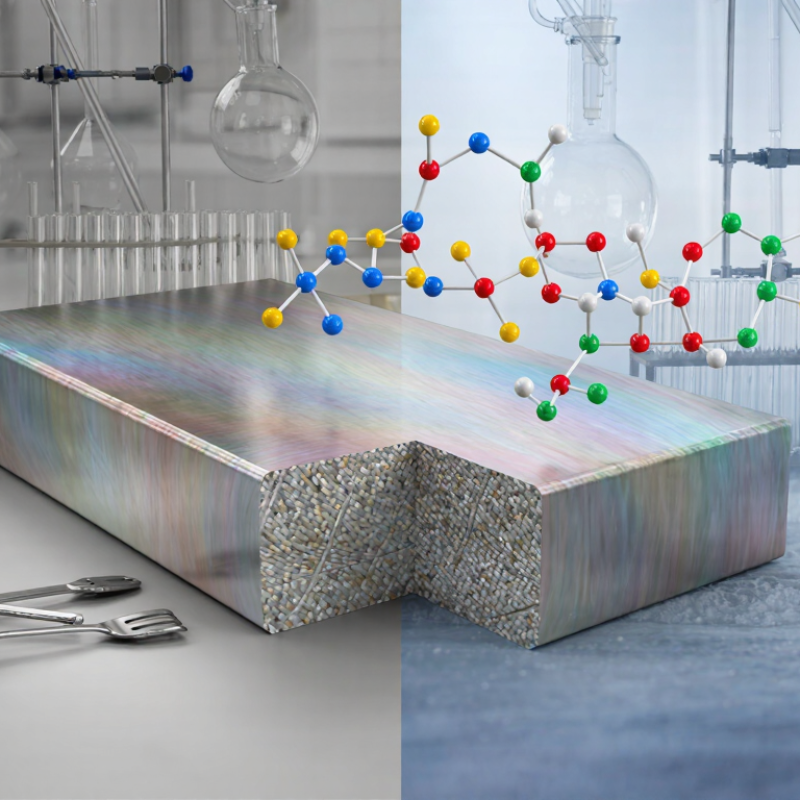
Chromium’s Definition: Why Stainless Steel Requires at Least 10.5% Cr
Chromium’s Definition: Why Stainless Steel Requires at Least 10.5% Cr
Chromium is the key element behind stainless steel’s corrosion resistance. EN 10088-1 defines stainless steel as containing at least 10.5% chromium by mass. It also limits carbon to 1.2%. This threshold allows chromium to form a thin, self-repairing oxide film on the surface. The film is extremely thin. Yet it blocks oxygen, moisture, and many chemical attacks.
The International Stainless Steel Forum reported global stainless steel production of about 58.4 million metric tonnes in 2023. This volume shows how widely chromium-bearing steel supports construction, food processing, transport, and energy equipment. However, chromium content alone does not explain every performance result. Nickel, molybdenum, carbon, surface condition, welding quality, and design also matter. A polished surface usually behaves differently from a scratched or contaminated one.
The 10.5% rule is not a magic shield. A handrail beside a coastal road may develop brown tea staining, even when it meets the definition. Chloride deposits can concentrate inside scratches and crevices. Poor drainage makes the problem worse. In practical inspections, I would check the alloy certificate, weld areas, surface finish, and cleaning history together. Chromium starts the protection system. It does not finish the engineering decision.
Passive Film Science: How Cr₂O₃ Protects Steel from Corrosion
China Top What Is the Role of Chromium in Stainless Steel?
Chromium creates stainless steel’s most important defense: a passive film. At least 10.5% chromium is required under EN 10088 for stainless steel classification. ASTM specifications also rely on chromium-rich grades for corrosion resistance. When oxygen and moisture reach the surface, chromium reacts and forms a thin Cr₂O₃-rich layer. This film is only a few nanometers thick, yet it blocks iron from dissolving. It can also rebuild after light scratching, provided oxygen remains available. That process is called self-passivation.
The protection is not unlimited. Chloride ions can penetrate weak areas, especially inside crevices, weld heat zones, and stagnant water. NACE’s IMPACT study estimated global corrosion costs at about US$2.5 trillion annually, equal to roughly 3.4% of global GDP. Poor surface cleaning can make chromium-rich steel behave badly. That point is often underestimated. A contaminated surface may look bright but still corrode locally. Regular inspection should check deposits, roughness, weld discoloration, and drainage.
Tips: Keep surfaces clean, dry, and properly finished. Remove carbon-steel particles after fabrication. Avoid chloride cleaners and trapped water. For demanding environments, compare alloy chemistry with ISO 9223 exposure conditions. Test critical components rather than trusting appearance alone. The passive film is powerful, but it is not magic.
Chromium is the key alloying element that gives stainless steel its corrosion resistance. At approximately 10.5% or more chromium, exposure to oxygen promotes the formation of a thin, adherent chromium oxide (Cr₂O₃) passive film. This film acts as a barrier and can rapidly reform when the surface is lightly damaged. The values below show typical chromium content ranges for common stainless steel grades; higher chromium content generally supports stronger passivation, although corrosion performance also depends on nickel, molybdenum, carbon, surface condition, and the environment.
Grade Data: 304 Contains 18–20% Cr, While 316 Contains 16–18% Cr
Chromium gives stainless steel its most important defense: a thin, self-repairing oxide film. This invisible layer helps the surface resist moisture, oxygen, and many mild chemicals. When the film is scratched, chromium reacts with air and reforms it. The protection is strong, but it is not unlimited.
Grade data matters. 304 stainless steel usually contains 18–20% chromium. It also offers reliable corrosion resistance for kitchen equipment, indoor panels, and general fabrication. 316 contains 16–18% chromium, slightly less than 304. However, 316 also includes molybdenum, which improves resistance to chloride attack from saltwater, cleaning solutions, and coastal air. Chromium remains essential, even when another alloying element receives more attention.
Small details matter. Weld heat can discolor a surface and reduce its protective condition temporarily. Iron contamination from carbon-steel tools can also create misleading rust marks. A grade chart alone may not predict field performance. Surface finish, cleaning habits, temperature, and exposure time all influence results. In practical inspections, 304 often performs well in ordinary environments, while 316 provides more confidence near chlorides. Not always. Poor fabrication or neglected cleaning can weaken either choice.
China Top: What Is the Role of Chromium in Stainless Steel? — Grade Data: 304 Contains 18–20% Cr, While 316 Contains 16–18% Cr
| Stainless Steel Grade |
Chromium (Cr), wt.% |
Nickel (Ni), wt.% |
Molybdenum (Mo), wt.% |
Carbon, max. wt.% |
Main Role of Chromium |
Typical Characteristics |
| 304 |
18.0–20.0 |
8.0–10.5 |
— |
0.08 |
Forms the passive chromium-oxide film that protects the steel from general atmospheric corrosion. |
Common austenitic grade with good corrosion resistance, formability, and weldability. |
| 316 |
16.0–18.0 |
10.0–14.0 |
2.0–3.0 |
0.08 |
Maintains the passive film; chromium works with molybdenum to improve resistance to chloride-related pitting and crevice corrosion. |
More suitable than 304 for marine, chemical, and chloride-containing environments. |
| 430 |
16.0–18.0 |
— |
— |
0.12 |
Provides the protective passive layer and contributes to oxidation resistance. |
Ferritic, magnetic stainless steel with moderate corrosion resistance and good resistance to oxidation. |
| 410 |
11.5–13.5 |
— |
— |
0.15 |
Provides the minimum chromium level needed for stainless behavior and improves oxidation resistance. |
Martensitic grade offering high strength and hardness, with lower corrosion resistance than 304 or 316. |
| 2205 Duplex |
22.0–23.0 |
4.5–6.5 |
3.0–3.5 |
0.030 |
The higher chromium content supports strong passivation and works with molybdenum and nitrogen to resist localized corrosion. |
Duplex structure combines high strength with strong resistance to chloride stress-corrosion cracking. |
| 2507 Super Duplex |
24.0–26.0 |
6.0–8.0 |
3.0–5.0 |
0.030 |
The very high chromium level strengthens the passive film and supports exceptional resistance to pitting and crevice corrosion. |
High-alloy duplex grade for demanding marine, offshore, chemical, and process applications. |
Key takeaway:
Stainless steel generally requires at least about 10.5% chromium to form a continuous, self-healing passive chromium-oxide film. Increasing chromium typically improves general corrosion and oxidation resistance, while elements such as molybdenum and nitrogen further enhance resistance to localized corrosion.
Pitting Resistance: PREN = %Cr + 3.3×%Mo + 16×%N
China Top: What Is the Role of Chromium in Stainless Steel?
Chromium creates the passive film that protects stainless steel from rapid corrosion. Most engineering grades contain at least 10.5% chromium, according to ASTM A240 chemical requirements. However, chromium alone cannot predict pitting resistance. Chloride concentration, temperature, surface contamination, and welding history also matter. Small chemistry changes can become visible as pin-sized pits.
The practical indicator is PREN = %Cr + 3.3×%Mo + 16×%N.
Using nominal values, an 18% chromium grade with 0.08% nitrogen reaches a PREN near 19.3.
A typical 17% chromium, 2.1% molybdenum grade reaches about 24.3.
A duplex composition near 22% chromium, 3% molybdenum, and 0.18% nitrogen approaches 34.8.
These calculations follow alloy-selection guidance from the International Molybdenum Association and chemistry limits in ASTM A240.
Higher PREN usually means stronger resistance to chloride pitting. Not immunity. ASTM G48 testing remains important because real surfaces contain weld discoloration, scratches, and deposits. A polished coupon may perform well, while a heat-tinted weld edge fails earlier. This is where PREN can mislead. It compares chemistry, but not surface condition or fabrication quality. In practice, engineers should verify the calculated value against service temperature, chloride data, and independent test results. Poor cleaning can erase part of the expected advantage.
Standards and Applications: EN 10088 Classifies Alloys Above 10.5% Cr
China Top: What Is the Role of Chromium in Stainless Steel?
EN 10088 identifies stainless steel by a minimum chromium content of 10.5% by mass. This threshold separates stainless grades from ordinary carbon steel in a practical way. Chromium reacts with oxygen and forms a thin passive film on the surface. That film helps resist rust, staining, and atmospheric attack. It can rebuild after light scratching when oxygen is available.
The number is only a starting point. It does not guarantee equal corrosion resistance across every grade. Nickel, molybdenum, carbon, nitrogen, and heat treatment also change performance. EN 10088 lists stainless families such as austenitic, ferritic, martensitic, and duplex steels. Each family suits different working conditions. A kitchen sink, pressure vessel, coastal railing, and cutting tool may require completely different compositions.
In fabrication work, material certificates should be checked against the specified EN 10088 grade. Surface contamination from carbon-steel tools can still create rust marks on a chromium-rich surface. Welding may also alter local corrosion resistance if heat control is poor. The 10.5% rule is useful, but it is not a magic line. A specification can be correct on paper and still be poorly matched to salt spray, acidic liquids, or repeated cleaning. That detail deserves more attention than the word “stainless” alone.
Conclusion
What is the role of chromium in stainless steel? Chromium is the essential element that gives stainless steel its resistance to corrosion. When the chromium content reaches at least 10.5%, it reacts with oxygen to form a thin, stable chromium oxide (Cr₂O₃) passive film on the surface. This self-repairing layer shields the underlying metal from moisture, oxygen, and many corrosive environments, helping stainless steel remain durable and attractive.
Chromium content also affects the performance of different grades. For example, 304 stainless steel typically contains 18–20% chromium, while 316 contains approximately 16–18% chromium. Resistance to localized pitting can be estimated with the Pitting Resistance Equivalent Number (PREN): PREN = %Cr + 3.3×%Mo + 16×%N. This shows that chromium works together with molybdenum and nitrogen to improve protection. EN 10088 classifies stainless steel alloys containing more than 10.5% chromium, supporting its importance in applications such as construction, food processing, and industrial equipment.

 TEDDI STEEL