What industries rely on stainless steel products? The answer reaches far beyond kitchens. Stainless steel supports food processing, healthcare, construction, transport, energy, and chemical production. Its value is practical: corrosion resistance, cleanability, strength, and long service life. A bright handrail, a sterilizer chamber, and a brewery tank all show how the same material serves very different needs.
The World Stainless Association’s 2024 figures report 58.4 million tonnes of global stainless-steel melt-shop production in 2023, up 4.6% from 2022. That scale reflects demand across multiple sectors, not one dominant use. Hospitals need surfaces and instruments that withstand frequent cleaning. Food plants use tanks, conveyors, and piping that resist corrosion. Construction projects specify stainless fasteners and cladding where weather exposure matters. Transport and energy systems use it in components that face heat, moisture, or demanding operating conditions. The numbers do not explain every purchasing decision.
Market analyst Markus Moll’s work on stainless-steel markets offers a useful perspective: sector demand depends on both industrial growth and the material’s performance in service. In other words, buyers weigh more than the initial price. They also consider maintenance, durability, and the conditions a product must endure. This overview examines the industries that rely on stainless steel, while recognizing that grades, fabrication methods, and local requirements vary. A material can be highly capable and still be the wrong choice for a particular job.
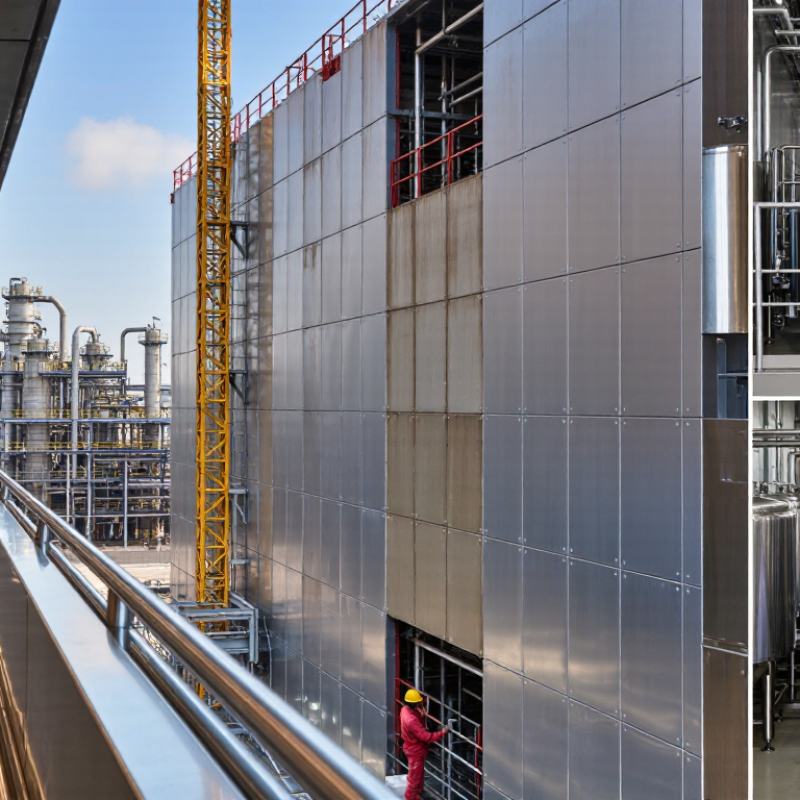
Stainless steel serves many practical roles in buildings and public works. It appears in exterior cladding, stair rails, lift doors, bridge fittings, and fasteners exposed to rain. In busy transit stations, smooth steel handrails can be cleaned frequently and withstand daily contact. Water and wastewater facilities also use stainless components where moisture is constant. The right alloy depends on the environment. Coastal air, de-icing salts, and industrial pollutants can increase corrosion risks, so designers should assess local exposure before specifying a grade.
Material choice is only part of the job. Good detailing helps water drain instead of collecting in joints, where staining or corrosion may develop. Fabricators and installers should also consider surface finish, weld quality, and contact with other metals. Small choices matter. Stainless steel can reduce repainting needs, but it is not maintenance-free, and unsuitable grades may disappoint outdoors. It can also cost more upfront than coated alternatives. That trade-off deserves honest discussion, especially on projects with tight budgets. One point is easy to miss: a durable material still depends on careful design and inspection.
In food and beverage plants, stainless steel forms the working surfaces people rarely notice: mixing tanks, washdown tables, pipework, cold-room shelving, and serving counters. Its corrosion resistance and smooth finish can support routine cleaning, but the material alone does not guarantee hygienic equipment. Poorly finished welds, damaged seals, and hard-to-reach joints can trap residue. Design matters. Operators need surfaces that are accessible, maintained, and suited to the food being handled.
The scale of the challenge is significant. The FAO reported that about 13.2% of food was lost between harvest and retail in 2021 (FAO, Tracking Progress on Food and Agriculture-related SDG Indicators, 2023). The WHO estimates that unsafe food causes 600 million illnesses each year (WHO, Estimates of the Global Burden of Foodborne Diseases, 2015). Stainless steel equipment cannot prevent every loss or hazard, but well-designed tanks, chilled storage racks, sinks, and service counters make cleaning and temperature control more practical. In kitchens, a scratched prep surface or a poorly drained sink can still undermine careful routines. That detail is easy to overlook.
| Production or Service Stage | Typical Equipment | Common Stainless Steel Grade | Why Stainless Steel Is Used | Important Hygienic Design Consideration |
|---|---|---|---|---|
| Receiving and preparation | Work tables, sinks, ingredient bins, and preparation bowls | 304 / 304L | Offers good corrosion resistance for many food-preparation environments and is suitable for frequent washing. | Use smooth, cleanable surfaces and avoid gaps or crevices where food residue can collect. |
| Mixing and blending | Mixing vessels, tanks, agitators, and ingredient hoppers | 304 / 304L | Provides a durable, non-porous contact surface for many ingredients and routine cleaning processes. | Design welds, joints, and internal surfaces to support complete drainage and effective cleaning. |
| Acidic or salty product handling | Brine tanks, sauce-processing vessels, and some product-contact piping | 316 / 316L | Its molybdenum content generally improves resistance to chloride-related corrosion compared with 304, though suitability depends on conditions. | Confirm compatibility with the product, cleaning chemicals, concentration, temperature, and exposure time. |
| Thermal processing | Cookers, heat exchangers, pasteurization equipment, and jacketed vessels | 304 / 304L or 316 / 316L | Can withstand many common food-processing temperatures and repeated cleaning cycles when correctly specified. | Account for thermal expansion, product contact, weld quality, and the effects of cleaning and sanitizing procedures. |
| Transfer and filling | Product pipes, sanitary fittings, pumps, valves, and filling nozzles | 304 / 304L or 316 / 316L | Supports cleanable product-transfer systems and resists corrosion in many process environments. | Minimize dead legs and stagnant areas; select compatible seals and fittings for the process and cleaning method. |
| Cold storage and maturation | Storage tanks, fermentation vessels, and refrigerated-room shelving | 304 / 304L; 316 / 316L where needed | Provides a sturdy surface for wet production areas and can be cleaned between batches. | Specify grade and finish based on product chemistry, humidity, salt exposure, and cleaning practices. |
| Cleaning and sanitation | CIP tanks, washdown stations, drainage components, and equipment frames | 304 / 304L or 316 / 316L | Commonly used in equipment exposed to washdown and cleaning routines; grade selection must reflect chemical exposure. | Check chemical concentration and temperature, and prevent standing water through suitable slopes and drainage. |
| Food and beverage service | Commercial sinks, counters, serving surfaces, and kitchen equipment | 304 / 304L | Combines durability with a smooth surface suited to regular cleaning in many service settings. | Maintain surfaces and joints, and use cleaning products appropriate for the stainless steel grade. |
Note: Grades shown are common examples, not universal specifications. Final material selection depends on the food or beverage, process conditions, cleaning chemicals, temperature, and applicable food-safety requirements.
Healthcare and pharmaceutical settings need surfaces that can be cleaned reliably and withstand frequent use. Stainless steel appears in instrument trays, worktables, sinks, carts, and equipment housings. Its smooth, nonporous finish can make soil easier to remove, but cleanliness depends on design and routine care, not material alone. Details matter. Crevices around welds, joints, and fasteners can hold residue if they are poorly finished or difficult to reach. Staff often notice these small obstacles during a busy shift, when every extra cleaning step adds friction.
In pharmaceutical facilities, stainless steel is commonly used for processing vessels, transfer lines, shelving, and preparation areas. The selected grade and surface finish should suit the chemicals, temperatures, and cleaning methods used on site. Corrosion resistance is valuable, not absolute; harsh agents or neglected damage can still affect a surface. Cleaning procedures should be established and verified for the actual equipment and process. Not always easy. A dented cart or scratched bench may seem minor, yet damage can complicate cleaning and inspection. Regular checks, prompt repairs, and clear maintenance records help teams keep hygienic spaces dependable. Even then, stainless steel cannot compensate for rushed procedures or unclear responsibilities.
Specified chromium content ranges in common stainless steel sheet grades (weight %)
Grade 316L is commonly selected for pharmaceutical process equipment where corrosion resistance and cleanability are important. Actual suitability depends on the process environment, surface finish, fabrication, and cleaning procedures. Composition ranges shown are specified values from ASTM A240 for plate, sheet, and strip.
Stainless steel is used in transportation because it can resist corrosion while handling vibration, moisture, and frequent cleaning. In road vehicles, it appears in exhaust pipes, clamps, fasteners, and selected structural fittings. A mechanic may notice its value when a corroded joint no longer releases cleanly. Details matter. The right alloy depends on heat, road salt, and the stresses each part must endure.
Ships face a harsher mix of salt spray, damp air, and changing temperatures. Stainless steel may be specified for railings, pumps, piping, and deck fittings, but grade selection is critical. Salt is relentless. A suitable alloy and sound fabrication can help slow corrosion; poor weld finishing or trapped seawater can still cause trouble. On railways, stainless steel is used in handrails, exterior panels, door hardware, and some passenger-car interiors, where durability and easy cleaning are useful.
Material choice is not a simple upgrade. Stainless steel can cost more than coated alternatives, and its weight may matter in vehicle design. Contact with other metals can also create corrosion risks if components are poorly isolated. Not every part needs it. Engineers must weigh operating conditions, maintenance access, and service life, then inspect real components over time. That last step is sometimes overlooked, and specifications alone cannot reveal every problem in the field.
Energy and chemical processing plants rely on stainless steel for pipes, tanks, heat exchangers, and pump housings. These systems may face moisture, changing temperatures, and aggressive process fluids. Stainless steel can resist corrosion, but performance depends on the alloy, fluid chemistry, and operating conditions. There is no universal grade. A pipe carrying hot, chloride-rich water may behave differently from one handling a dry gas. Small details matter, too: weld quality, crevices, and deposits can create vulnerable spots. Even a well-chosen material needs inspection.
Tips: Match the steel grade to the actual fluid, temperature, and cleaning routine. Ask for material certificates, and check that welds and fittings match the design requirements. During maintenance, look closely around joints, supports, and areas where liquid can collect. A simple visual check can reveal discoloration or deposits, but it cannot confirm every form of corrosion. Use suitable inspection methods when service conditions warrant them.
Design choices sometimes involve trade-offs. A higher-alloy option may improve resistance, yet cost more and require careful fabrication. Plants should review operating records and investigate unexpected leaks before repeating a material choice. Conditions change. That review can be imperfect, especially when process data is incomplete, so engineers should document assumptions and revisit them after equipment has been in service.
It appears in exterior cladding, stair rails, lift doors, bridge fittings, and rain-exposed fasteners.
Their smooth surfaces can be cleaned frequently and withstand daily contact. Still, regular cleaning matters.
Coastal air, de-icing salts, and industrial pollutants can raise the risk. Local exposure should guide grade selection.
No. It may reduce repainting, but it still needs suitable design, inspection, and care.
Drainage, surface finish, weld quality, and contact with other metals all matter. Small choices matter.
Common uses include pipes, tanks, heat exchangers, and pump housings exposed to moisture or process fluids.
Match it to the fluid, temperature, and cleaning routine. There is no universal grade.
Check joints, supports, and places where liquid collects. Look for discoloration or deposits, but visual checks have limits.
It may improve corrosion resistance, but can cost more and require careful fabrication. The trade-off deserves review.
Review operating records, investigate leaks, and document assumptions. Incomplete process data can make decisions less certain.
Stainless steel supports a wide range of industries because it is durable, easy to maintain, and resistant to corrosion. In construction and infrastructure, it appears in building features, structural components, and public works where long service life matters. Food and beverage businesses use stainless steel for processing equipment, storage vessels, and serving surfaces, helping maintain clean and practical workspaces. In healthcare and pharmaceutical settings, its smooth, hygienic surfaces make it suitable for tools, fixtures, and facility equipment that must be cleaned regularly.
So, what industries rely on stainless steel products? Transportation, energy, and chemical processing are also major users. Vehicles, ships, and railways use stainless steel components that need to withstand demanding conditions, while energy and chemical facilities depend on corrosion-resistant piping, tanks, and other equipment. Across these fields, stainless steel offers a dependable combination of strength, cleanliness, and long-term performance.

TEDDI STEEL