TEDDI STEEL
1 / 5
Grade 316L is the low carbon version of 316 and is immune from sensitization (grain boundary carbide precipitation). It is extensively used in heavy gauge welded components. The austenitic structure provides excellent toughness, even down to cryogenic temperatures. Compared to standard chromium-nickel austenitic stainless steels, 316L offers higher creep, stress to rupture, and tensile strength at elevated temperatures.
| Grade | Element | C | Mn | Si | P | S | Cr | Mo | Ni | N |
|---|---|---|---|---|---|---|---|---|---|---|
| 316L | Min | - | - | - | - | - | 16.0 | 2.00 | 10.0 | - |
| Max | 0.03 | 2.0 | 0.75 | 0.045 | 0.03 | 18.0 | 3.00 | 14.0 | 0.10 |
| Grade | Tensile Str (MPa) min | Yield Str 0.2% Proof (MPa) min | Elong (% in 50 mm) min | Rockwell B (HR B) max | Brinell (HB) max |
|---|---|---|---|---|---|
| 316L | 485 | 170 | 40 | 95 | 217 |
| Grade | UNS | JIS | EN | BS |
|---|---|---|---|---|
| 316L | S31603 | SUS 316L | 1.4404 | 316S11 |
Corrosion Resistance: Excellent in a range of atmospheric environments and many corrosive media—generally more resistant than 304. Regarded as the standard "marine grade stainless steel," though not resistant to warm seawater. It resists potable water with up to 1000 mg/L chlorides at ambient temperatures.
Heat Resistance: Good oxidation resistance in intermittent service to 870°C and in continuous service to 925°C. Grade 316L is more resistant to carbide precipitation.
Fabrication: Excellent weldability by all standard fusion and resistance methods. 316L does not require post-weld annealing. It tends to work harden if machined too quickly, so low speeds and constant feed rates are recommended.
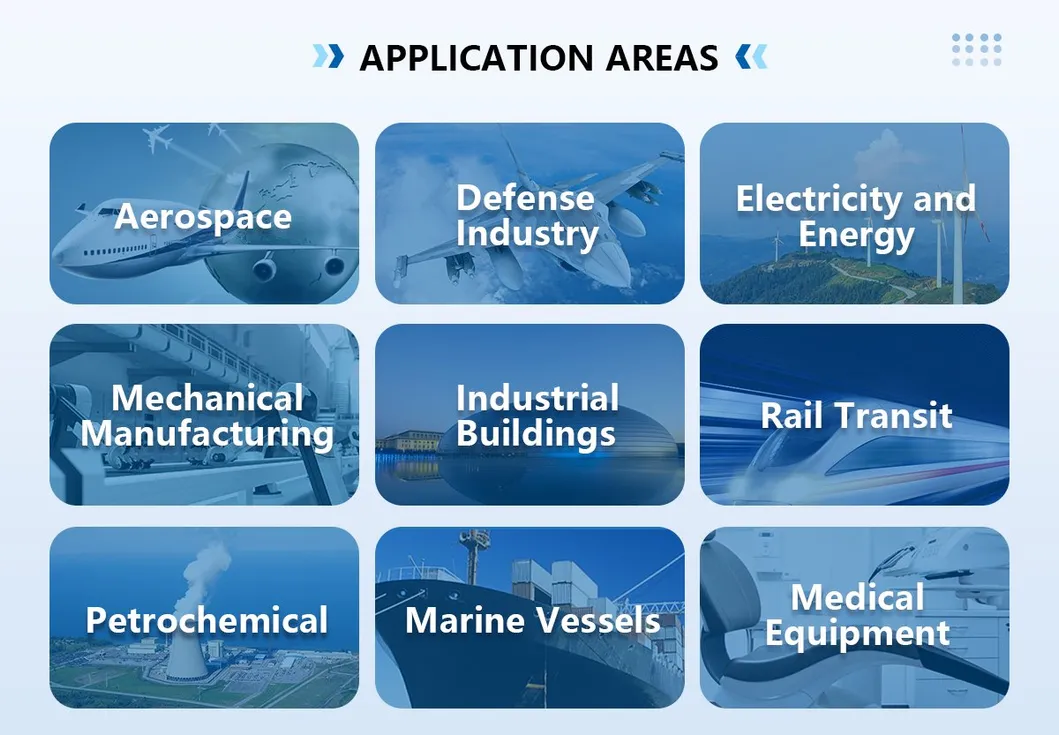
316L steel is a medical-grade stainless steel highly indispensable in the healthcare field due to its biocompatibility and corrosion resistance. Main applications include: